The Differences Between Heartburn and Acid Reflux
It’s no wonder people get confused.
We talk about heartburn, acid reflux, indigestion – these are all terms we use to describe various uncomfortable and sometimes painful side effects of digestion, but what exactly are they and how do they differ?
Firstly, let’s tackle indigestion.

Indigestion
Indigestion, also known as dyspepsia, is a general term to describe a range of digestive issues, including heartburn.1
Indigestion – which is itself a symptom and not a condition – is so common, pretty much everyone gets it from time to time and it’s usually felt at the top of the stomach or in the lower part of the chest.2
Why does indigestion occur?
As with many digestive side effects it usually occurs after eating, whether that’s after a fatty, spicy or heavy meal or as a result of eating too quickly.2
For most sufferers there’s no obvious reason why it happens and it’s just one of life’s occasional and uncomfortable annoyances.2
For others these issues can be frequent and they can be distressing and effect everyday life.
The difference between heartburn and acid reflux
There’s a reason for linking the terms heartburn and acid reflux together; both are types, or symptoms, of indigestion and one is caused by the other.
Heartburn
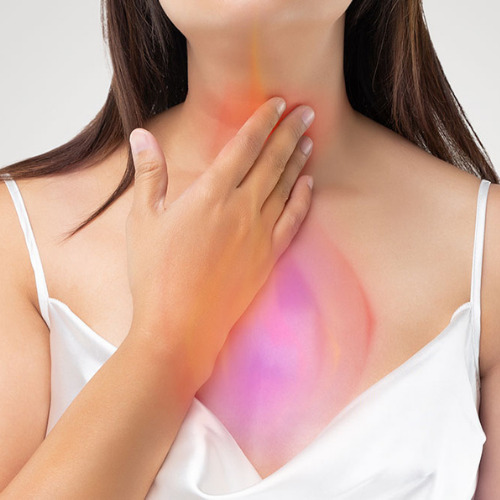
Heartburn is a burning, and sometimes painful, feeling in the chest* caused by stomach acid leaking upwards towards the throat.3
Signs of heartburn can include a recurring cough or hiccups, unpleasant sour taste, a hoarse voice, bad breath, bloating and feeling sick.3
Again, it tends to be worse after eating, lying down or bending over.3
When it happens regularly it’s known as gastro-oesophageal reflux disease (GORD).3
There are several lifestyle factors which can cause or make heartburn worse including diet – certain food and drinks known as triggers are fatty, spicy or rich food, coffee, tomatoes, chocolate, citrus fruits and alcohol.
Other factors include stress and anxiety, being overweight, smoking and pregnancy.
Pregnancy hormone changes can relax the muscular ring, which connects the stomach to the gullet (the oesophagus) and works to prevent stomach contents passing through.4
In the later stages of pregnancy, the growing baby can press against the stomach.4

What causes heartburn?
Well, that’s where acid reflux comes in.
Acid reflux occurs when the muscular ring fails for whatever reason, allowing stomach acid to travel the wrong way causing the pain of heartburn.5
We all need stomach acid to aid the digestion process but while the stomach can resist it, the gullet can’t so if there’s enough passing through, it can cause the pain of heartburn.5
Lifestyle changes to help with heartburn
Heartburn, particularly if it’s mild, can be eased or prevented by making some simple lifestyle changes such as avoiding food and drink triggers, eating smaller meals more frequently, finding ways to relax more, not eating within a few hours of going to bed and sitting up straight when you eat.3
Even wearing looser fitting clothes around the waist can make a difference.3
If heartburn is troubling you while you sleep, try raising one end of your bed by 10-20cms so your chest and head are above waist-level. This helps to stop stomach acid travel up towards your throat.3
Losing weight can help if you’re overweight, avoid smoking and cut down on alcohol.3

Speaking to a GP about heartburn
Your pharmacist can also recommend antacids which neutralise stomach acid to help relieve the burn and indigestion.3 If these measures aren’t working and you have heartburn most days for three weeks or more – speak to your GP who can provide stronger treatments.3Omeprazole – over the counter treatment
Heartburn medicine such as omeprazole, the main ingredient in Pyrocalm Control 20mg Gastro-Resistant Tablets, is a widely used treatment for indigestion, heartburn and acid reflux and can be taken by adults, including pregnant and breastfeeding women.6 Omeprazole belongings to a group of medicines called Proton Pump Inhibitors (PPIs) which work to reduce the amount of acid your stomach makes by interrupting the production process.7 This helps to reduce the pain or discomfort in your chest or stomach and so allows the body to reduce any inflammation caused by stomach acid leaking into the gullet.7 Pyrocalm Control 20mg Gastro-Resistant Tablets (omeprazole) are used in adults for the short-term treatment of reflux symptoms (e.g. heartburn, acid regurgitation, acid reflux). Always read the label. IMPORTANT: Medicines can affect the unborn baby. Always talk to your doctor or pharmacist before taking any medicine in pregnancy. *You should seek medical attention if you suspect your symptoms relate to a more serious condition such as a heart attack.References
1 https://www.nhs.uk/conditions/indigestion/ 2 https://gutscharity.org.uk/advice-and-information/symptoms/indigestion/ 3 https://www.nhs.uk/conditions/heartburn-and-acid-reflux/ 4 https://www.nhs.uk/pregnancy/related-conditions/common-symptoms/indigestion-and-heartburn/ 5 https://gutscharity.org.uk/wp-content/uploads/2018/11/Guts-UK-Heartburn-and-Reflux-Leaflet.pdf 6 https://www.nhs.uk/medicines/omeprazole/ 7 https://www.oxfordshireccg.nhs.uk/professional-resources/documents/clinical-guidelines/gastroenterology/proton-pump-inhibitors-patient-information-leaflet.pdfSelf Care Advice

The Differences Between Heartburn and Acid Reflux

Diet & Heartburn: Diet Tips To Avoid Heartburn

Heartburn on holiday

Diet & lifestyle tips for heartburn & acid reflux

Pregnancy Heartburn Relief: How to Manage Heartburn and Acid Reflux in Pregnancy
How Omeprazole Works

Heartburn and the Science Behind it

Anxiety and Heartburn